The best things to do in Austin, Texas come down to five things: live music, barbecue and breakfast tacos, cold spring-fed swimming, a lake you can paddle right downtown, and a million and a half bats that fly out from under a bridge at sunset. Add a handful of walkable neighborhoods with their own personalities, and you have a city that rewards you for slowing down.
We’ve hosted Austin visitors at SoCo Cottage for 14 years. It’s a 1937 Craftsman three blocks off South Congress in Travis Heights (78704), and we’re a Guest Favorite on Airbnb with a 4.97-star rating. The question we hear most is some version of “what should we actually do?” This guide is our answer, organized by neighborhood so you can plan your days around where things are, not just what they are.
What Are the Best Things to Do in Austin, Texas?
If you only have a weekend, start with these. Together they cover the music, food, water, and character that make up the Austin bucket list for most first-time visitors.
Walk South Congress Avenue. Boutiques, boot shops, murals, coffee, and live music, all on one stretch of sidewalk.
Swim at Barton Springs Pool. A spring-fed pool in Zilker Park that stays cool year-round.
Watch the bats at the Congress Avenue Bridge. A free sunset show from spring through fall.
Paddle Lady Bird Lake. Rent a kayak or paddleboard and see downtown from the water.
Eat Central Texas barbecue. Brisket is the benchmark. Plan for a line at the famous spots.
Catch live music on a weeknight. Small rooms, real bands, low or no cover.
Tour the Texas State Capitol. Free guided tours, and it’s taller than the U.S. Capitol.
Climb Mount Bonnell at sunset. A short staircase to a view over Lake Austin.
Learn the two-step at a honky-tonk. Lessons first, then the band.
Take a Hill Country day trip. Barbecue towns, swimming holes, and wineries within about 90 minutes.
The rest of this guide goes neighborhood by neighborhood, then covers the free, weird, indoor, and after-dark angles, plus day trips, timing, and a simple plan for two or three days.
South Congress (SoCo): Where Most Visitors Start
South Congress is the stretch of Congress Avenue just south of Lady Bird Lake, and it’s the most walkable, most photographed part of Austin. It’s where you go to browse, eat, people-watch, and hear music without needing a plan.
A good SoCo afternoon looks like this: coffee at Jo’s Coffee and a photo at its “i love you so much” mural, a slow walk past the boot shops and vintage stores, an ice cream or a slice of pizza, then live music at the Continental Club once the sun goes down. Our guests talk most about the easy places close to home: Magnolia Cafe, June’s All Day, Tiny Grocer, and Neighborhood Sushi.
We keep this short on purpose. South Congress deserves its own deep dive, and we’ve written a full neighborhood guide on our blog with where to eat, shop, and listen. For this guide, the main point is simple: SoCo is the easiest place in Austin to spend a day on foot.
Downtown and Lady Bird Lake
Downtown Austin is where the state government, the big hotels, and two of Austin’s best-known nightlife streets meet the lake. Most of what’s worth doing here is outdoors and free.
Tour the Texas State Capitol
The Capitol’s pink granite dome sits at the top of Congress Avenue, a straight shot north from South Congress. The free guided Capitol tours leave from the South Foyer and run about 30 minutes. You can also wander the building and its grounds on your own. Go up to the rotunda and look straight up into the dome.
Paddle or walk Lady Bird Lake
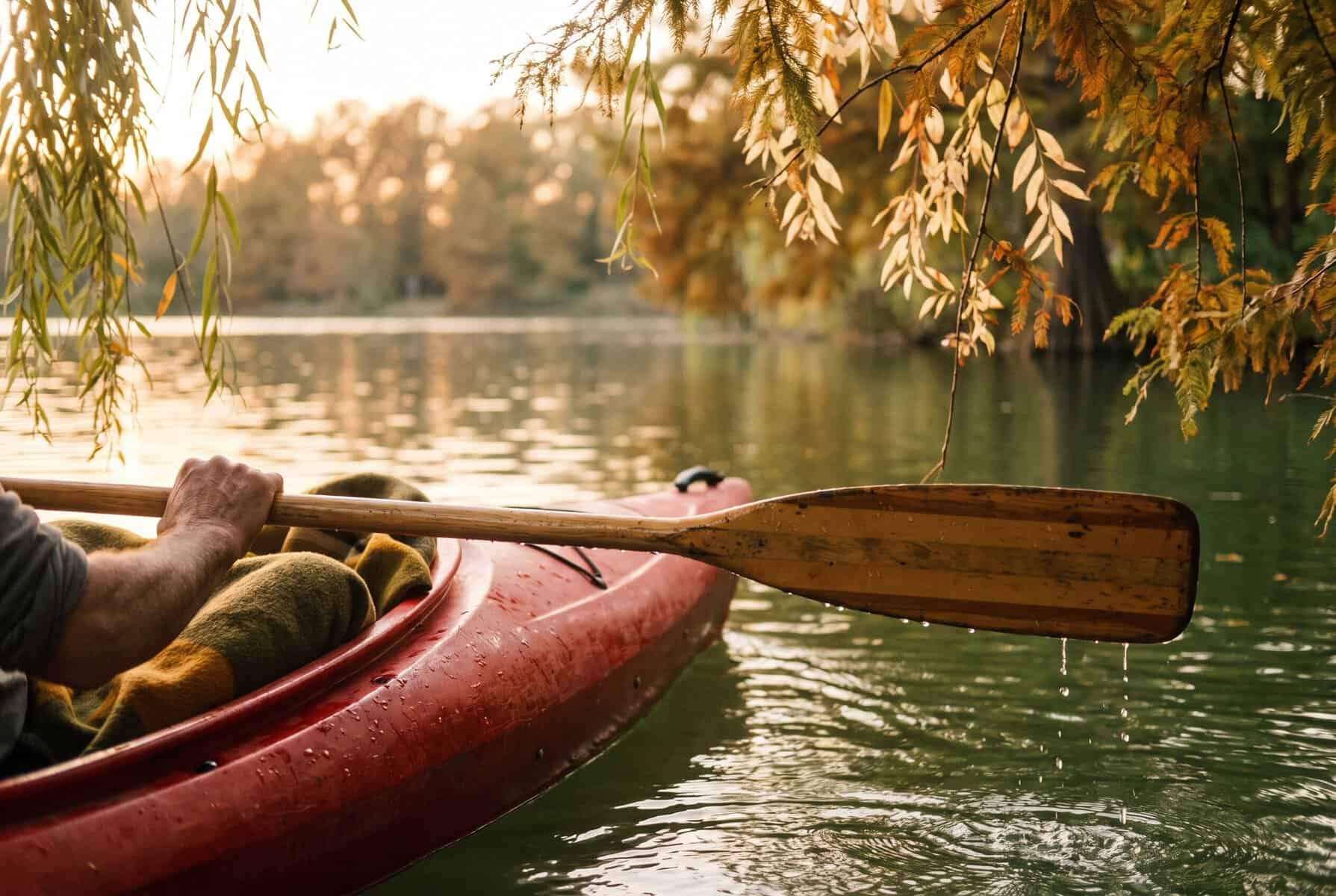
Lady Bird Lake is the dammed stretch of the Colorado River that runs through downtown. Most motorized boats aren’t allowed, so the water belongs to kayaks, canoes, rowers, and paddleboards. Several outfitters along the shore rent by the hour, and an early-morning or golden-hour paddle is one of the most relaxing things you can do in the city.
On land, the Ann and Roy Butler Hike-and-Bike Trail loops roughly 10 miles around the lake, with shorter loops if you cross at one of the bridges. Expect runners, dogs, and families at every hour. Note that a few north-shore sections have construction detours running into 2027, so follow the posted reroutes.
Watch the Congress Avenue Bridge bats
The Ann W. Richards Congress Avenue Bridge shelters what Texas Parks and Wildlife calls the largest urban bat colony in the world, estimated at 1.5 million Mexican free-tailed bats. The bats live here roughly March through October and stream out around sunset to feed. Watching is free from the bridge sidewalk or the lakeshore lawn, and you can also book a short bat cruise on the lake.
Get there 20 to 30 minutes before sunset, and know that cool or rainy evenings can delay or cancel the show. Mid- to late summer is the peak.
Sixth Street and Rainey Street
Sixth Street is Austin’s classic bar district: loud, crowded on weekends, and a rite of passage for some groups. Rainey Street is a few blocks south, where old bungalows have been turned into bars with big porches and backyard patios. Both are better at night, and both are covered below in the after-dark section.
Zilker Park and Barton Springs
Zilker Park is Austin’s 358-acre front yard, just southwest of downtown. If you want to see how locals spend a sunny afternoon, this is where to look.
Swim at Barton Springs Pool
Barton Springs Pool is a three-acre, spring-fed pool inside Zilker Park. The city lists the water at an average of 68 to 70 degrees, which feels cold in April and like a gift in August. Adult admission is under $10, and the pool is generally open early morning to late evening, with a midday cleaning closure on Thursdays.
Barton Springs closes now and then after heavy rain or for maintenance, so check the city’s page the day you go. When it’s open, bring a towel, find a spot on the grassy hill, and plan to stay a while.
More to do in Zilker
The rest of the park has room to spread out: a big lawn for frisbees and picnics, a botanical garden, a playscape for kids, and the trailhead for the Barton Creek Greenbelt, a long wooded trail with swimming holes after good rains. Every October, the Great Lawn becomes the main stage for the Austin City Limits Music Festival, so the park is partly closed for several weeks around it.
East Austin: Barbecue, Food Trucks, and Breweries
East Austin is the neighborhood east of I-35, and it’s where a lot of the city’s food energy lives. Think barbecue joints, taco trucks, breweries, coffee shops, and murals on the sides of old buildings.
The barbecue question
Central Texas barbecue means beef brisket, smoked low and slow over post oak, sold by the pound on butcher paper. Franklin Barbecue in East Austin is the most famous name, and its line is famous too. People arrive hours before opening on weekends. If you’d rather not wait, check franklinbbq.com for its preorder system, or try one of the many other well-known spots around town where the wait is shorter.
Breweries and food truck lots
Austin’s food trucks often park in shared lots with picnic tables and a bar nearby, which makes them easy for groups with different cravings. East Austin also has a dense cluster of taprooms and cideries. Plan a ride home rather than a drive.
The UT Campus Area: Museums and Murals
The University of Texas sits just north of the Capitol, and its museums are some of the best rainy-day or hot-afternoon options in Austin.
Bullock Texas State History Museum. Three floors on the story of Texas, plus an IMAX theater. It’s open daily, 10 a.m. to 5 p.m., and it’s an easy pairing with the Capitol.
Blanton Museum of Art. UT’s art museum, with a strong collection and Ellsworth Kelly’s “Austin,” a small chapel-like building with colored-glass windows.
Harry Ransom Center. A free museum and research library. Its galleries are home to a Gutenberg Bible, one of five complete copies in the U.S., and the galleries are closed on Mondays.
“Hi, How Are You” mural. Daniel Johnston’s frog drawing on Guadalupe Street near 21st Street is a small, beloved piece of Austin music history.
West Austin: Mount Bonnell and Lake Austin
West of downtown, the land rises into hills and the river widens into Lake Austin. This is where to go for views.
Mount Bonnell, in Covert Park, is one of the highest points in the city. A shaded stone staircase of about 100 steps leads to the top, where you look down on Lake Austin and the hills beyond. It’s open from early morning to late evening, and sunset is the busiest and prettiest time. The stairs aren’t stroller- or wheelchair-friendly.
In Southwest Austin, the Lady Bird Johnson Wildflower Center showcases native Texas plants and is especially good in spring, when wildflowers are blooming across Central Texas.
What Should You Eat in Austin?
Austin food is less about fine dining and more about doing a few things very well. If you eat these four things, you’ve done the city justice.
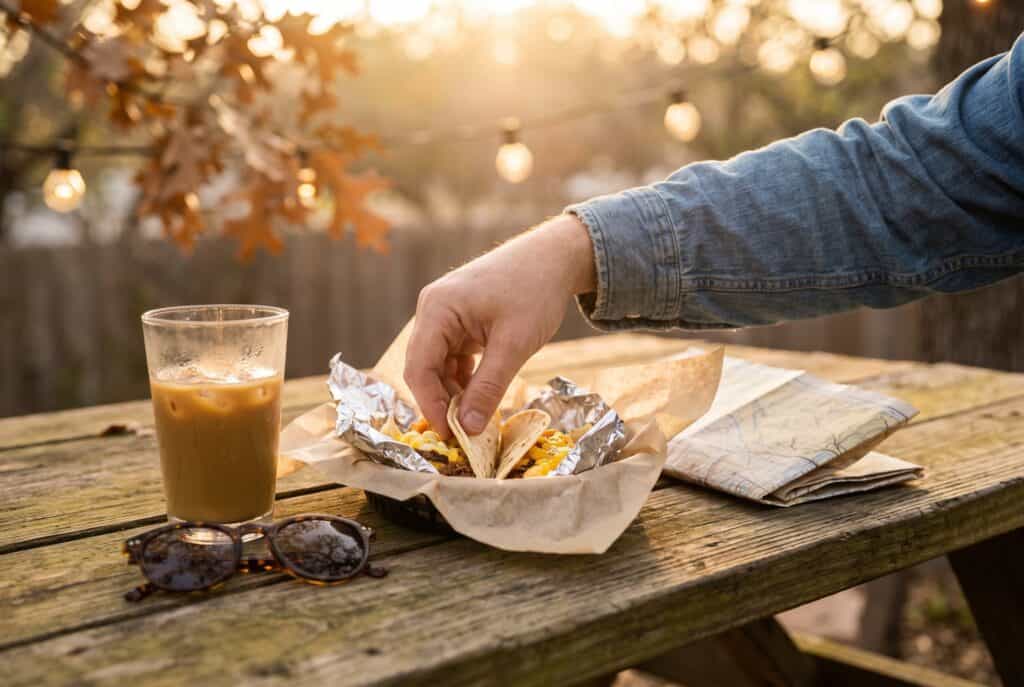
Breakfast tacos. Egg, potato, bacon, chorizo, or migas in a flour tortilla. Locals eat them any time before noon.
Brisket. See the barbecue section above. Go early, go hungry, and share.
Tex-Mex. Queso, enchiladas, and margaritas on a patio. Austin takes all three seriously.
Food trucks. The city’s trucks range from tacos to Thai to doughnuts, and many are open late.
Free Things to Do in Austin
Austin is a good city for a budget trip. Some of its best experiences cost nothing.
Watch the bats. Free from the bridge or the lakeshore.
Tour the Capitol. Guided tours are free.
Visit the Harry Ransom Center. Free admission.
Walk the Butler Trail. Ten miles of lakeside trail, open to all.
Climb Mount Bonnell. No fee to walk up for the view.
Mural hunt. South Congress, East Austin, and the UT area are full of painted walls.
Hike a greenbelt. Our neighborhood’s Blunn Creek trail is a quiet, shaded walk a few minutes from the cottage, and Little Stacy Park sits right alongside it.
We’ll cover more free picks in a dedicated guide, including cheap eats that won’t feel like a compromise.
Unique and Weird Things to Do in Austin
“Keep Austin Weird” started as a slogan to support local businesses, and the spirit still shows up in odd, homemade, and one-of-a-kind places.
The Cathedral of Junk. A towering, walk-through sculpture built from salvaged objects in a South Austin backyard. It’s a private home, so visits are by appointment only; call ahead and park considerately.
Museum of the Weird. A small cabinet of curiosities on Sixth Street, open daily, with oddities, wax figures, and old-school sideshow charm.
Dive-bar karaoke and dance halls. Austin’s bars run the range from gritty to glittery. The fun is in the regulars.
The bats, again. A million-plus bats living under a downtown bridge is about as weird, and wonderful, as a city gets.
Indoor Things to Do in Austin (Rain or Heat)
Austin summers routinely top 95°F, and spring storms roll through fast. When you need air conditioning, the city has good options.
Museums. The Bullock, the Blanton, and the Harry Ransom Center can fill a whole afternoon near UT.
Dinner-and-a-movie theaters. Austin is the hometown of the Alamo Drafthouse, where you order food and drinks from your seat.
Record stores and bookstores. Digging through vinyl is a very Austin way to spend a rainy hour.
Climbing gyms and arcades. Good options for active groups and families.
There’s also something to be said for a slow afternoon in. At the cottage, that means a record on the turntable, a book from the shelf, and the ceiling fans turning.
Things to Do in Austin at Night

Austin calls itself the Live Music Capital of the World, and nights are when it earns the name. You don’t need a big-ticket concert to hear something great. A Tuesday at a small club can be the highlight of the trip.
Live music on South Congress. The Continental Club has been a South Congress fixture for decades, with a mix of rockabilly, country, soul, and blues.
Two-step at a honky-tonk. The Broken Spoke on South Lamar offers two-step lessons on many nights before the band starts. Check its calendar before you go.
Rainey Street. Porch-and-patio bars in old bungalows; good for groups who want to wander.
Sixth Street. Louder and rowdier, especially on weekends. East Sixth tends to be a little more laid-back.
Late-night food trucks. A taco at midnight is part of the experience.
One thing our guests mention again and again is coming home after a night out to a quiet street. As one put it, the cottage is “close enough to all the great parts of Congress Ave, while still feeling far enough away to remain peaceful and quiet.”
If you’d like a home base that’s walkable to South Congress and quiet at night, you can [see dates and reviews for SoCo Cottage on Airbnb](https://www.airbnb.com/rooms/345473).
Things to Do in Austin for Adults and Small Groups
Austin is an easy city for a grown-up getaway, whether that’s a couples’ weekend, a milestone birthday, or a friends’ trip. The trick is to mix one or two planned moments with plenty of time to wander.
Book one great dinner. Austin’s popular restaurants fill up on weekends, so reserve ahead for the meal that matters most.
Plan a patio afternoon. Margaritas, a shady patio, and nowhere to be is a very Austin way to spend a few hours.
Take a group lesson. Two-step lessons, a cooking class, or a guided mural tour give a group something to do together.
Get out on the water. A sunset paddle or a boat day on one of the Hill Country lakes is a highlight for many groups.
Leave the evening open. Some of the best nights start with “let’s see who’s playing.”
For groups, where you stay matters as much as what you book. A whole home with a kitchen and a shared outdoor space means you aren’t splitting up across hotel rooms at the end of the night.
Best Day Trips from Austin
Austin sits on the edge of the Texas Hill Country, so some of the best things to do are an easy drive away. Rent a car for a day, or make it the one day you don’t walk.
Lockhart (about 45 minutes south). A small town that bills itself as the Barbecue Capital of Texas. Go for lunch and compare a few classic pits.
Hamilton Pool Preserve (about 40 minutes west). A swimming hole under a collapsed limestone grotto. Reservations are required every day, and swimming depends on water quality, so check the county’s page before you go.
Gruene and New Braunfels (about an hour south). Gruene Hall is one of Texas’s oldest dance halls, and the rivers nearby are made for tubing in summer.
Fredericksburg (about 90 minutes west). German heritage, Main Street shopping, peaches in early summer, and Hill Country wineries along the way.
Enchanted Rock State Natural Area (about 90 minutes west). A giant pink granite dome you can hike. Reserve a day pass ahead, especially on weekends.
When Is the Best Time to Visit Austin?
The best time to visit Austin for weather is spring (March to May) and fall (October and November). Summer is hot but quieter, and winter is mild with the lowest prices and the thinnest crowds.
Plan around the big events, because they shape prices and crowds across the city:
SXSW (March). Music, film, and tech take over downtown. In 2026 it ran March 12 to 18.
Bluebonnet season (late March to mid-April). Wildflowers line the highways for a short window.
Austin City Limits Music Festival (first two weekends of October). In 2026 it marked its 25th year at Zilker Park.
Formula 1 at Circuit of the Americas (October). The 2026 United States Grand Prix runs October 23 to 25.
If you’re flexible, November and the weeks after SXSW are the sweet spots for good weather and better value.
What to Do in Austin in 2 or 3 Days
Two days is enough for the highlights. Three lets you add a day trip or a slower morning. Here’s a simple plan built around a South Congress base.
Day 1: South Congress and downtown. Breakfast tacos and coffee, then a morning on South Congress. Walk or ride north to the Capitol for a free tour. Rest in the afternoon, then catch the bats at sunset and live music after dinner.
Day 2: Zilker and the lake. Swim at Barton Springs in the morning while it’s cool. Rent a kayak on Lady Bird Lake, then barbecue for a late lunch. Watch the sunset from Mount Bonnell and spend the evening on Rainey Street or at a honky-tonk.
Day 3: Your pick. Museums near UT if it’s hot or rainy, East Austin food trucks and breweries if it’s nice, or a Hill Country day trip to Lockhart or Fredericksburg.
How to Get Around Austin
Austin is spread out, so most visitors use a mix of walking, rideshare, and the occasional drive. You don’t need a car for every day, but you’ll likely want one for day trips.
Walk where it’s dense. South Congress, downtown, Rainey Street, and the UT area are all comfortable on foot, and the Congress Avenue Bridge connects SoCo to downtown.
Use rideshare for the gaps. East Austin, Zilker, and Mount Bonnell are short rides from South Congress.
Try bikes and scooters. Bike share and e-scooters are common downtown and along the lake.
Expect event traffic. During SXSW, ACL, and race weekend, roads near the venues close or crawl. Walk when you can.
The less time you spend in traffic, the more time you have for the good stuff. That’s the main reason we tell guests to pick a walkable base first.
Where to Stay: A Walkable Home Base in Travis Heights
Where you stay in Austin changes your whole trip. Downtown is convenient but loud, and some neighborhoods mean a rideshare for every outing. Travis Heights, just east of South Congress, gives you both sides: walk to SoCo by day, come home to a quiet street at night.
That’s the idea behind SoCo Cottage. It’s a whole-home 1937 Craftsman with three bedrooms and two baths, a full kitchen, off-street parking, and a string-lit back deck where groups like to end the night. Guests tend to mention the same things: the location, the record player and vinyl, the art on the walls, and how clean it is. Families like the Pack ‘n Play-ready room, the high chair, and the short walk to Little Stacy Park and the Blunn Creek trail.
Our record speaks for us: 14 years as Superhosts, a 4.97-star rating, and a Guest Favorite badge that puts the cottage in the top 5% of eligible Airbnb homes.
FAQ: Things to Do in Austin, Texas
What is Austin best known for?
Austin is best known for live music, barbecue, and its laid-back, slightly offbeat character. It’s the Texas state capital, home to the University of Texas, and host to SXSW and the Austin City Limits Music Festival. Visitors also come for its outdoor life, from Barton Springs to Lady Bird Lake.
What is the main attraction in Austin, Texas?
There’s no single main attraction, but the Texas State Capitol, South Congress Avenue, Barton Springs Pool, and the Congress Avenue Bridge bats are the most-visited highlights. Most first-time visitors try to see all four. They’re close enough to do in one or two days.
What should I do in Austin for a 2-day trip?
For a 2-day trip, spend one day on South Congress and downtown and one day at Zilker Park and Lady Bird Lake. Fit in barbecue, a sunset with the bats, and live music at night. The plan above lays it out day by day.
Is Austin a walkable city?
Austin as a whole is car-oriented, but several neighborhoods are very walkable. South Congress, downtown, Rainey Street, and the UT area are easy on foot, and you can walk between South Congress and downtown across the Congress Avenue Bridge. Staying in one of those areas means fewer rideshares.
When can you see the bats in Austin?
You can see the Congress Avenue Bridge bats from about March through October, around sunset. Late summer is the peak, when the colony is at its largest. Cool or rainy evenings can delay the flight, so give yourself some time.
Make Austin Feel Like Home
The things to do in Austin, Texas are spread across the city, but the best trips have a home base that makes every day easy. Walk to South Congress for coffee and music, head out for a swim or a day in the Hill Country, then come home to a quiet porch and a record on the turntable.
When you’re ready to plan, check dates and read guest reviews for SoCo Cottage on Airbnb. We’d love to host you.